
Anjelica Lindsey Commissioned by Lorena Navarro for Percussion Project, Amplifying Our Voices: Percussion Solo Works by Indigenous Composers
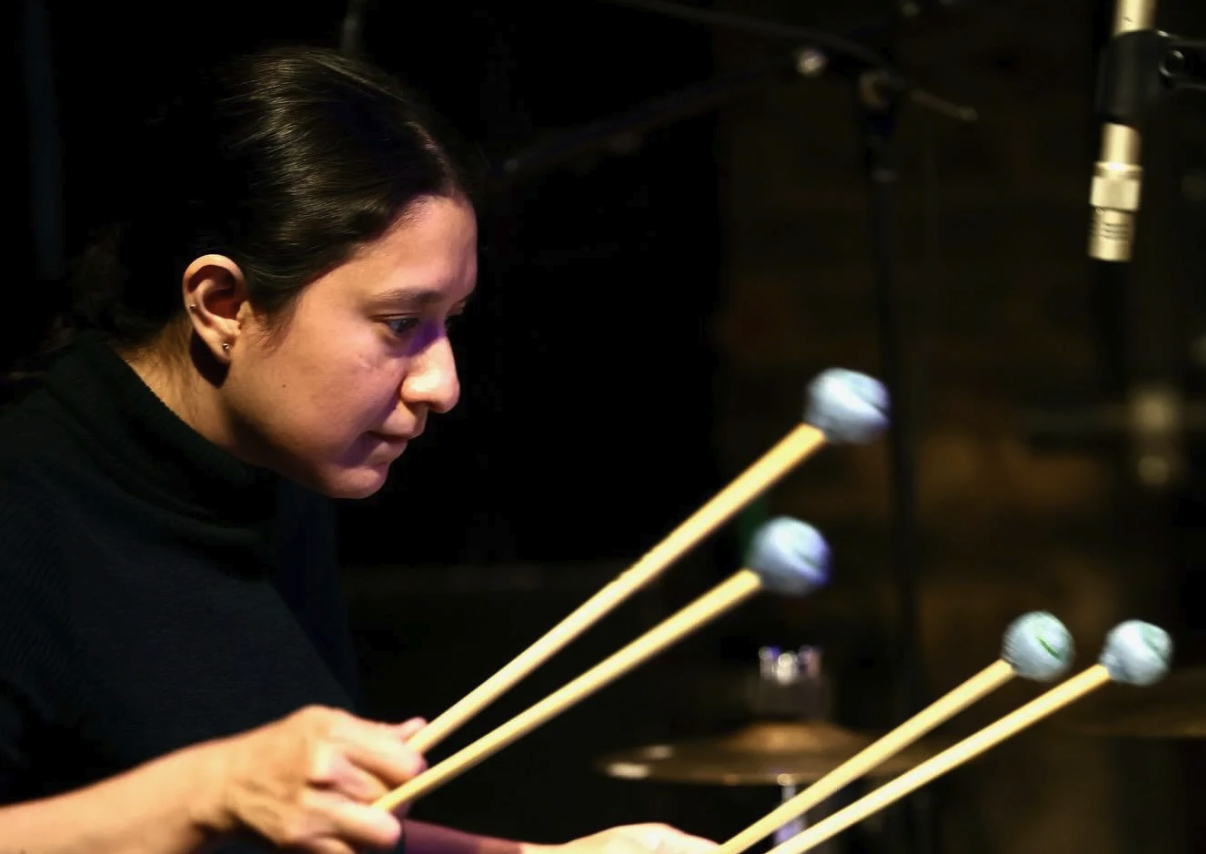
Lorena Navarro
In February 2025, percussionist Lorena Navarro won first prize in Michigan State University’s Running Start Competition for Amplifying Our Voices: Percussion Solo Works by Indigenous Composers, a project commissioning and premiering new works by Indigenous composers from the United States and Canada.
As part of the project, Navarro commissioned Anjelica Lindsey (Cherokee), along with Sonny-Ray Day Rider (Blackfoot), Kerey Harper (St. Theresa First Point Nation), and Danielle Jagelski (Oneida & Ojibwe), to create new percussion works. The commissions were presented as part of Navarro’s Spring 2026 dissertation lecture recital.
The project grew from Navarro’s 2023 internship with the Te-Moak Tribe of Western Shoshone in Elko, Nevada, where she helped organize a concert featuring traditional Shoshone songs performed by local students. The experience inspired her to create greater opportunities for Indigenous music to be heard on the concert stage.
Navarro also created a database of percussion solo and chamber works by Indigenous composers, providing performers and educators with a resource for discovering and programming this growing body of repertoire. Following her dissertation recital, she plans to tour the commissioned works to universities and high schools.
About the Piece
Cherokee Gothic
for solo marimba
Anjelica Lindsey, composer
The title Cherokee Gothic comes from an architectural term coined by Frank Lloyd Wright when describing the style of buildings at the University of Oklahoma during an in-person visit to the campus. Wright used the phrase casually to capture the blend of Gothic revival with local adaptations, a uniquely Oklahoman vernacular that layered cultural collisions into architectural form. This concept provides a powerful metaphor for the musical architecture of the composition: a work that reclaims and reinterprets a label historically applied by non-Indigenous observers, transforming it through the self-identification and authorship of a Cherokee woman composer.
Musical forms have often mirrored the spirit of architecture. In the Baroque, it was ornate and ornamental, music as cathedral filigree, rich with detail and embellishment. In the Romantic era, toccatas grew more expansive, sweeping, and emotive, built like monuments of sound. In each case, the form is about construction utilizing motifs laid like bricks, rhythmic propulsion rising like towers, harmonic arches suspending tension and release.
In Cherokee Gothic, I approach this tradition by considering my heritage as a citizen of Cherokee nation and the architectural vernacular of Oklahoma itself. Oklahoma’s landscape carries the scars and strength of colonial imposition layered against Indigenous resilience. The forms are weighty and serious, embodying both history and survival.
This composition, however, opens with a neo-gothic interpretation of Amazing Grace, a song known to have been sung by the Cherokee people during their forced removal journey on the Trail of Tears. Both architectural and ancestral, this work also loosely draws upon the grandeur of Widor’s Organ Toccata, and in the context of the marimba, itself an instrument of African, Guatemalan and Mexican trajectories, becomes the cathedral of wood, resonant and grounded, an instrument whose voice can be at once percussive and singing.
Musically, Cherokee Gothic blends tragic minor harmonies, chromatic mediants, and Neapolitan chords reminiscent of Chopin’s funeral marches with Cherokee lament-like descending bass lines. The relentless propulsion mirrors both the inexorable march of history and the forward thrust of survival. It is at once gothic in its seriousness, Cherokee in its grounding, and Oklahoman in its synthesis of influences and vernaculars.
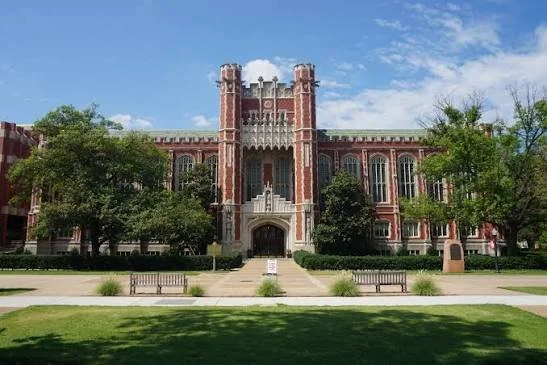
Cherokee Gothic is a term coined by Frank Lloyd Wright for a vernacular architectural style used on the campus of the University of Oklahoma. The term was invented by Wright while on a tour of the school's grounds, and, when coined, applied to Bizzell Memorial Library and Evans Hall.
